Attention route
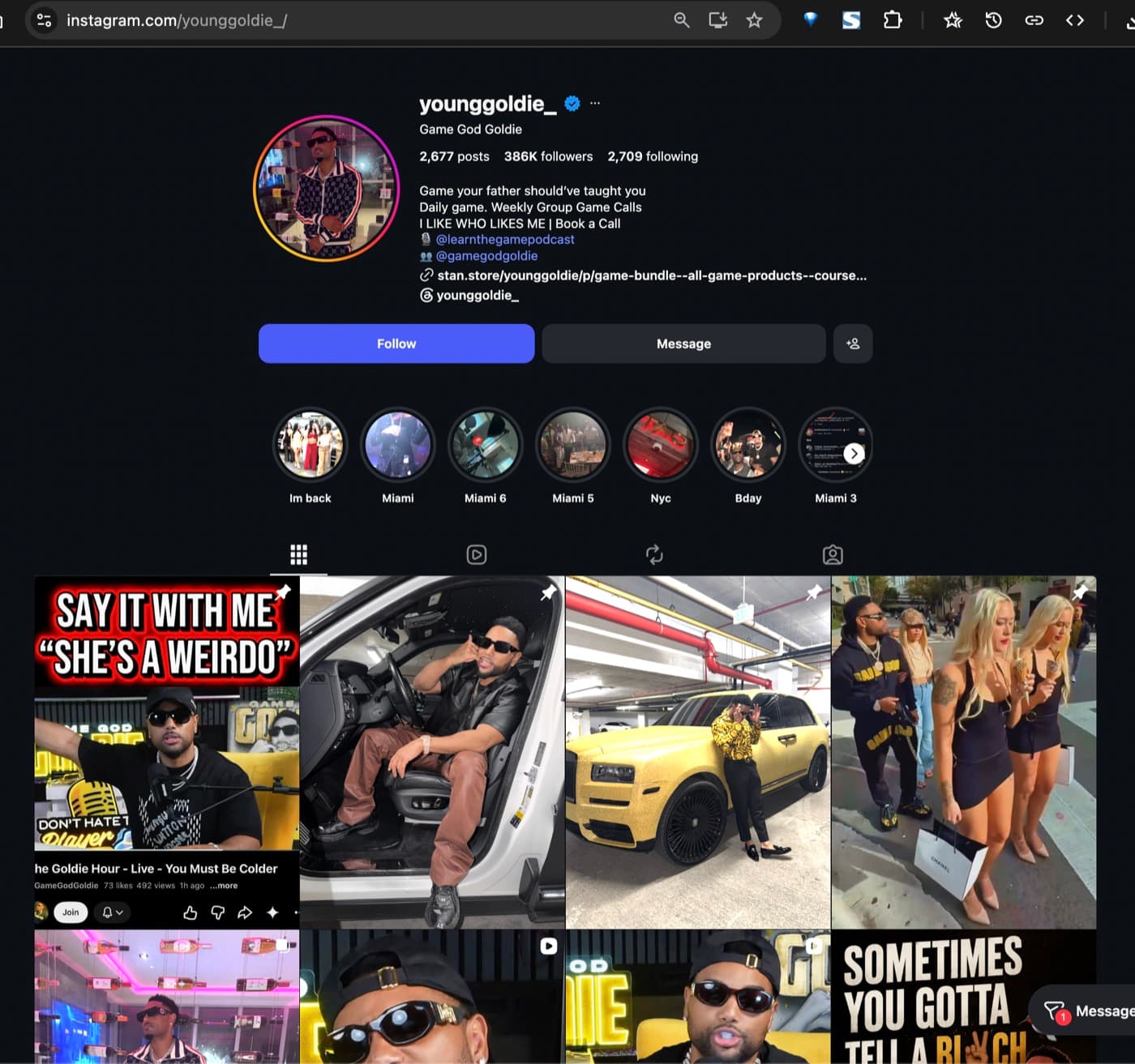
Instagram points directly into a paid product path.
The profile carries the audience, positioning, and a visible Stan Store product link in the bio.
Instagram profile · Captured 02 Aug 2026
Prepared for Game God Goldie
Your public ecosystem now spans bundles, a paid community, private calls and several mentorship levels. I mapped the customer path I would audit first, without pretending I can see inside your accounts.
Built from your public customer path and the systems named in your job brief.
The public customer path
It is a product ecosystem. The operational job is to turn every purchase into one reliable customer state, then make the correct next action obvious.
Instagram, YouTube, Facebook and TikTok
Bundle, Brotherhood, calls and mentorship
Main site, Stan Store and Skool
Product, access level and lifecycle stage
Fulfillment, onboarding, retention or upgrade
The profile carries the audience, positioning, and a visible Stan Store product link in the bio.
Instagram profile · Captured 02 Aug 2026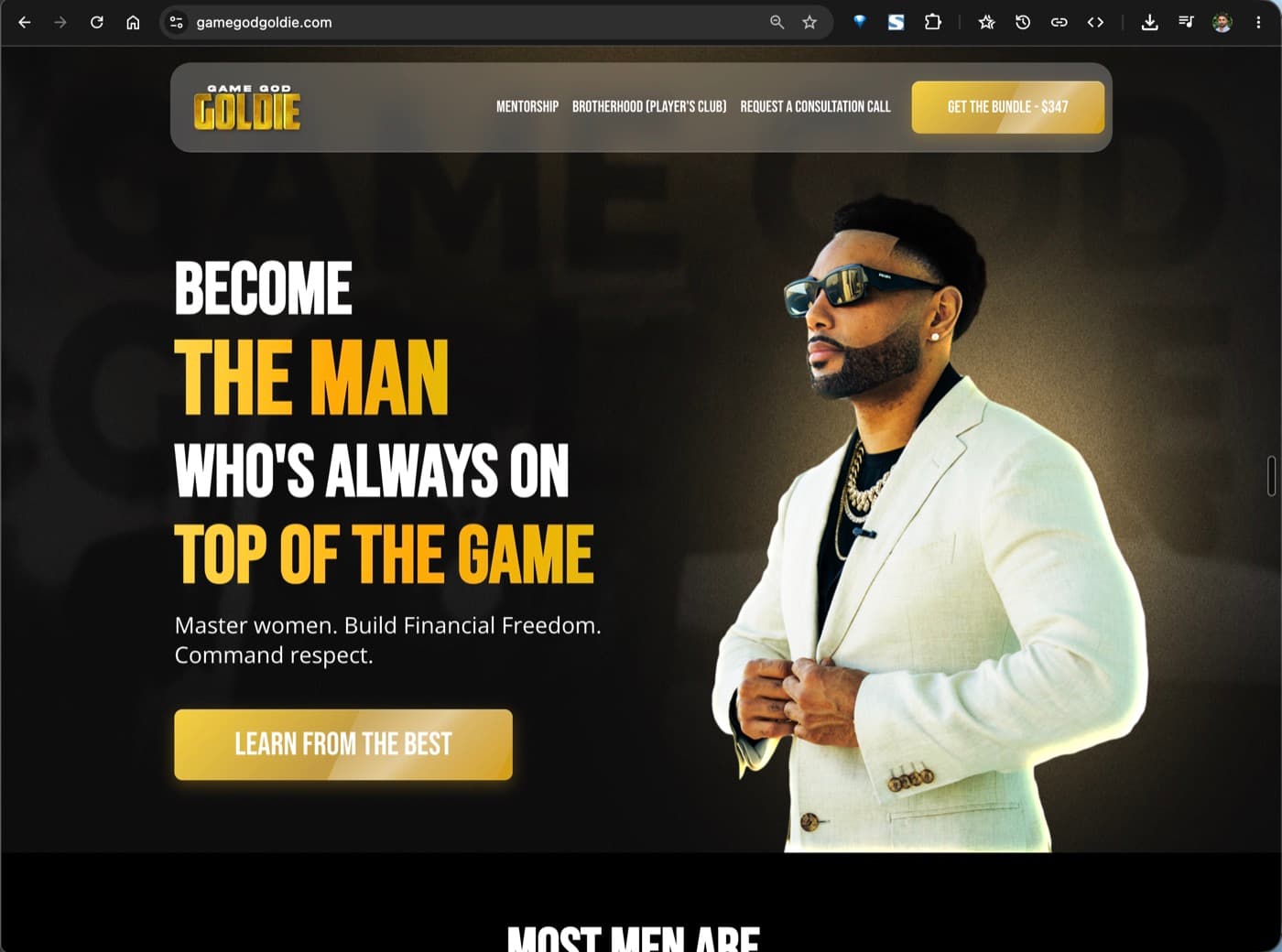
The navigation and calls to action split traffic across mentorship, Brotherhood, consultation calls, and the bundle.
gamegodgoldie.com · Captured 02 Aug 2026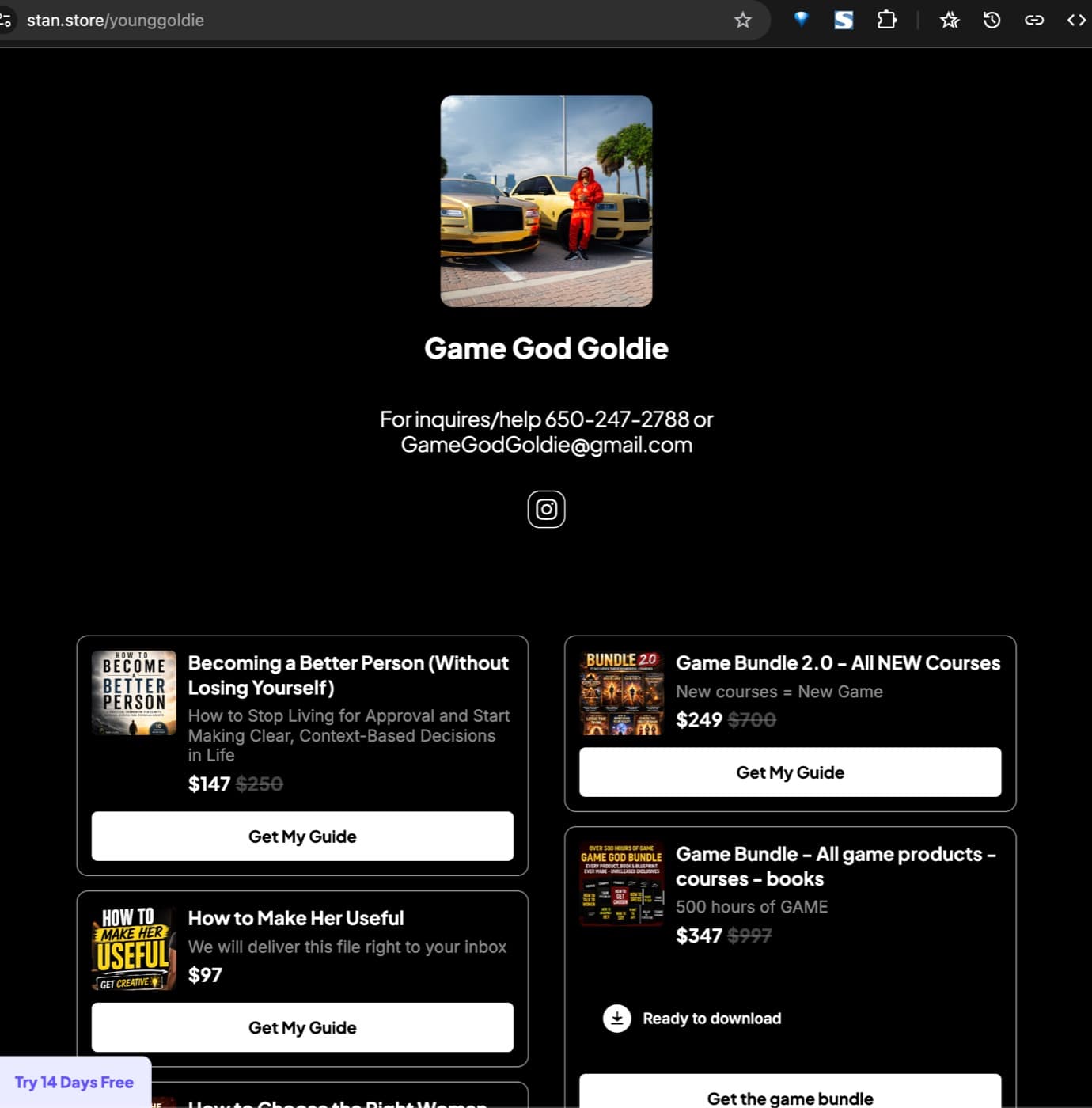
Products are listed with prices and download actions, which means fulfillment state has to be reconciled outside the landing page.
Stan Store · Captured 02 Aug 2026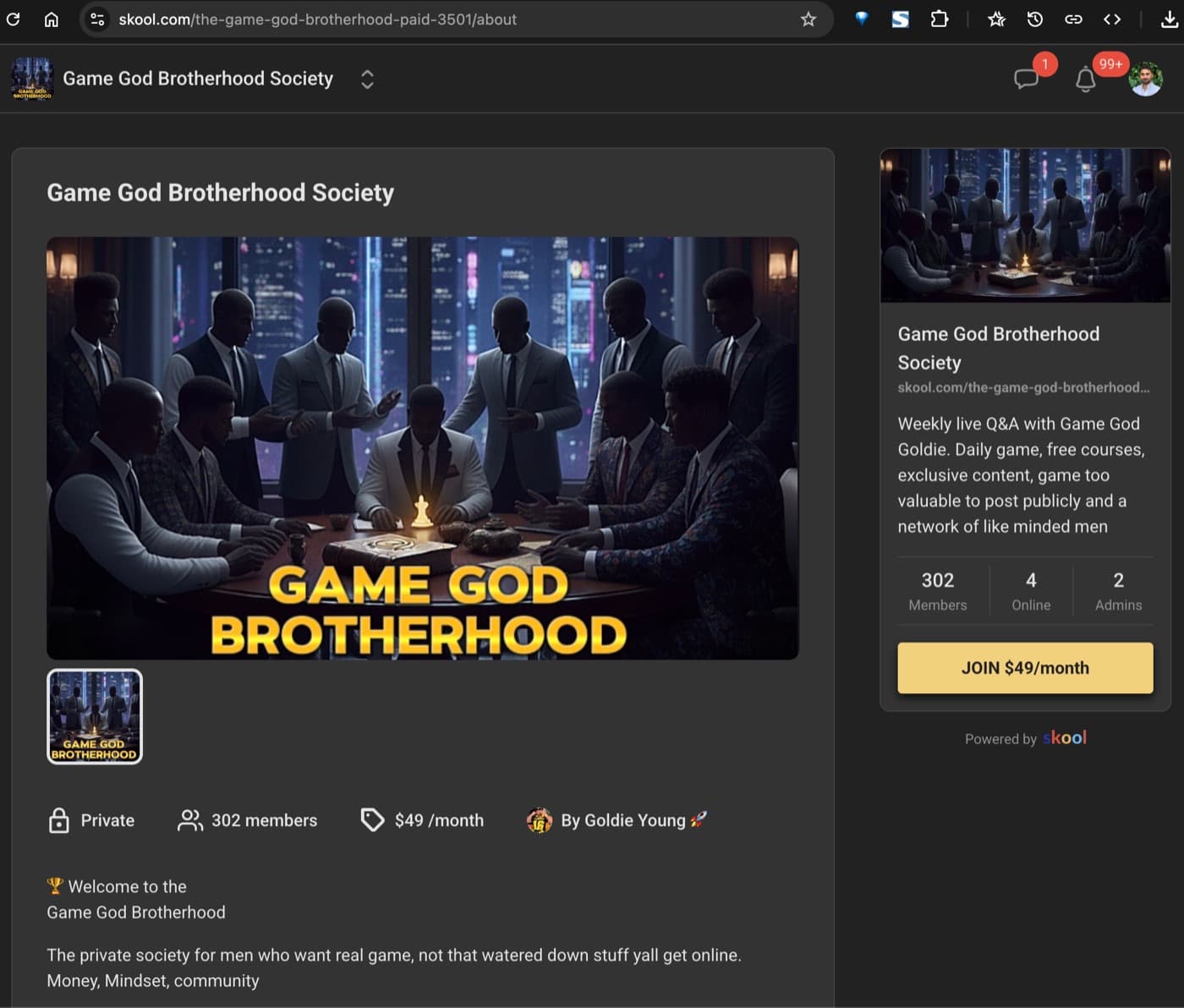
The listing shows the community name, member count, monthly price, and join button.
Skool · Captured 02 Aug 2026Multi-offer surface area
Bundle buyers, Brotherhood members, mentorship applicants and coaching-call leads should not all enter the same follow-up logic.
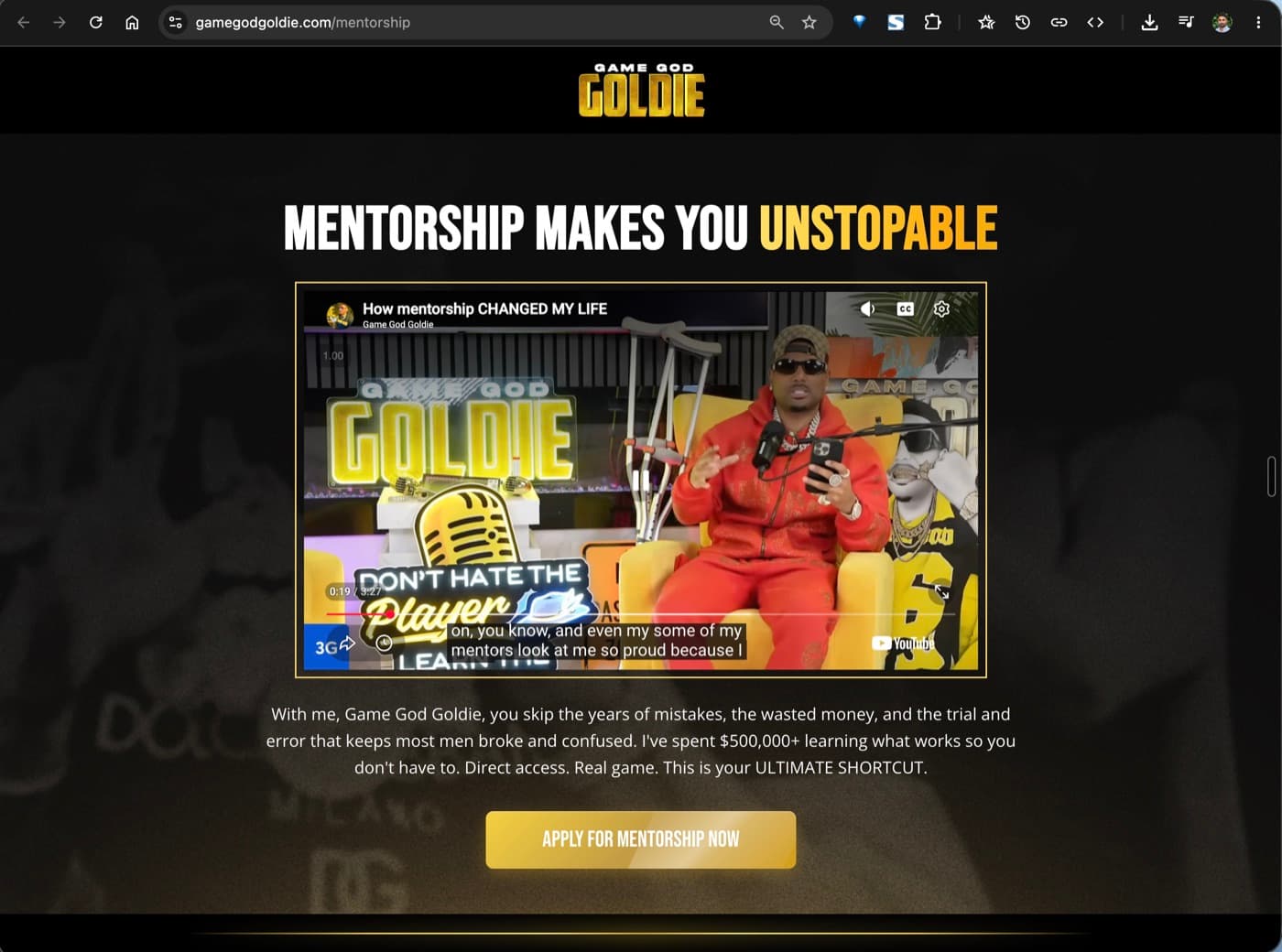 Mentorship
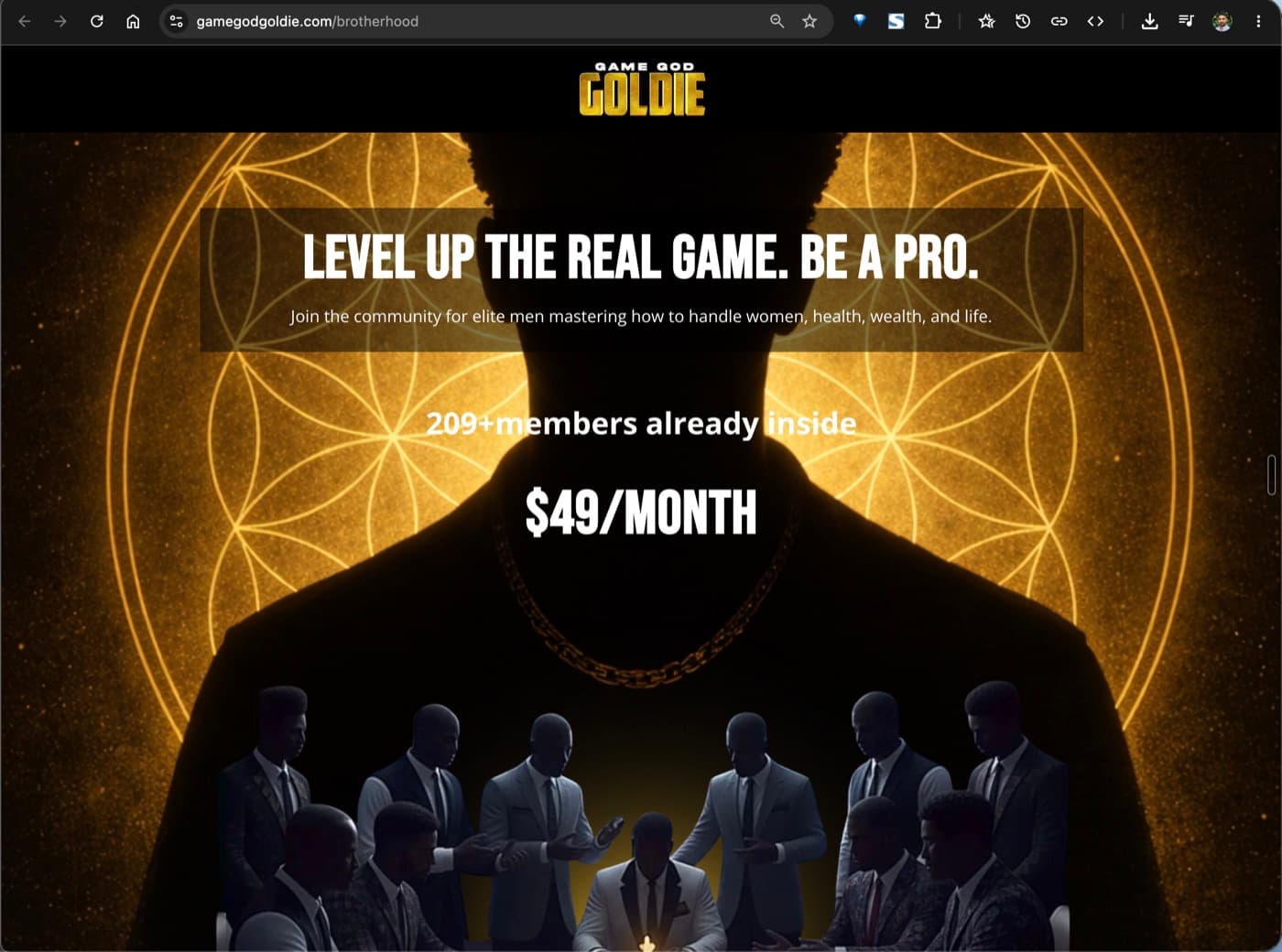 Brotherhood
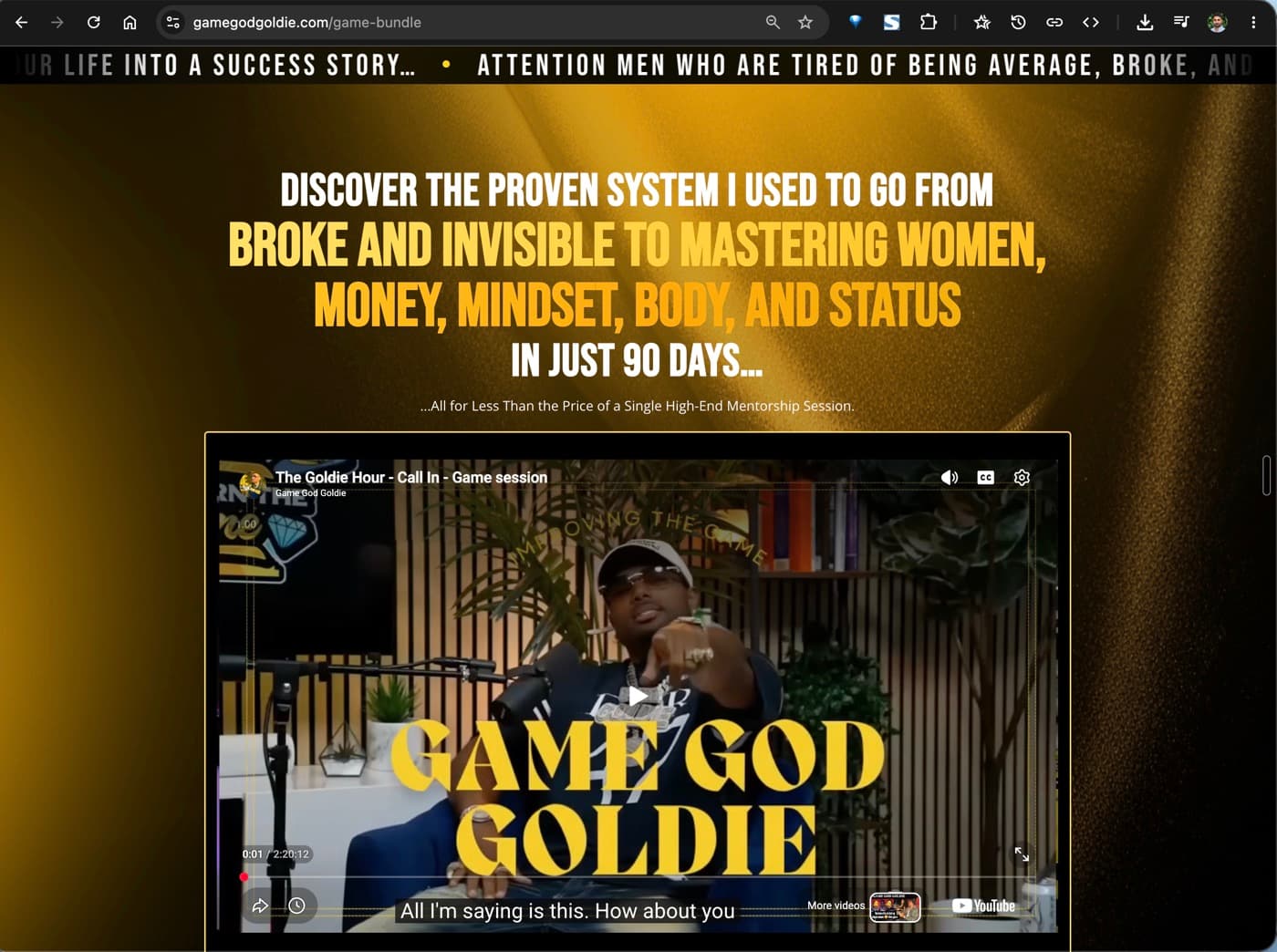 Game BundleStan Store
Before touching the automation
The public pages show different numbers. The audit picks the source of truth before automation starts using those values.
Different member counts appear on different surfaces.
Current checkout pricing needs to be confirmed.
Course and hour totals need one canonical version.
Observed in public materials supplied for this brief on 02 Aug 2026.
The architecture I would validate
Four things I would check first
Create one canonical product map so every payment becomes a specific product, tier and customer state, regardless of where checkout happens.
Define what should be granted, changed, removed or restored after a purchase, upgrade, failed payment, cancellation or refund.
Run the correct onboarding and follow-up while suppressing messages for offers the customer already owns.
Capture unknown products, duplicate records and failed access actions in an exception queue that a person can actually review.
Why I can build this
The useful part is knowing where buyers lose ownership, access and visibility.
I spent 40 months inside a US marketing agency working across CRM, lifecycle automation, reporting and production AI systems.
If I build this, you work directly with me. No junior handoff. No black-box automation.
Relevant case studies
Four examples. Same theme: make the next customer state clear.
View the FlowKit Systems case studiesBuilt: Pipelines, workflow modules and billing visibility for a real agency operation.
Relevant because paid buyers need a clear owner, status and next action.
Agency operations, not personal revenue attribution.
Open FlowKit case studiesBuilt: Two production AI agents with observability, versioning, failures and human review.
Relevant because repeated expert output needs review before customers see it.
Observed generation time. Human review still applies.
Open FlowKit case studiesBuilt: An 11-step quiz, 4 profiles, tailored recommendations and CRM routing.
Relevant because bundle, community and coaching buyers should not get the same follow-up.
Architecture only. No conversion or revenue claim.
Open FlowKit case studiesBuilt: A recruitment page and workflows for qualification, activation and tracking.
Relevant because people need stages, owners and handoff notes.
Pipeline movement, not revenue or performance claim.
Open FlowKit case studiesThe paid audit
I map the real purchase and access flow before anything gets rebuilt.
Next step
I will map the current state first, then recommend the smallest build that makes sense.
Check the audit scope